Pixell and Hub is an independent course aggregator. We may earn a commission when you click through.
Four Web Development Courses, From HTML Basics to Python
Only one listed course has a published price: $165 for a one-week HTML and CSS introduction, while longer formats add deeper programming practice.
$165 is the only published price in this group. That figure buys a one-week introduction to HTML and CSS, while the other listings leave pricing undisclosed and focus instead on subject coverage. The useful comparison is therefore not a fake price ranking: it is the jump from isolated markup lessons to a three-month course covering front-end, back-end, and Python.
No aggregate salary, completion, rating, or price-distribution statistics are available for these listings, so claims about market averages would be guesswork. As the available data shows, beginners can start cheaply, but deeper development training requires checking the provider for current tuition, schedule, certificate details, and workload before enrolling.

Start With the Building Blocks
HTML and CSS are the sensible first checkpoint because they let you create and style a page before JavaScript or server-side programming enters the picture. The two introductory listings cover those foundations separately or together, giving you a lower-risk way to test whether front-end work holds your attention.
Uvod u HTML
The HTML course is the narrowest starting point in the group, which is exactly why it suits a complete beginner who wants to understand page structure before adding styling. Pricing, duration, projects, and certificate details are not published in the supplied listing, so treat it as a fundamentals lesson rather than a career-ready program. Compared with the combined HTML and CSS course, this route may feel slower, but it removes one layer of confusion at a time. Best for a learner with no coding experience who wants to build a basic page structure before committing to a broader course.
Uvod u CSS – Srce
CSS is the natural follow-up to HTML: it handles presentation, layout, spacing, and visual hierarchy rather than the underlying page structure. The listing does not publish a price, duration, project count, or certificate outcome, so there is not enough evidence to call it a complete front-end pathway. I would choose it after an HTML primer, not before one. Best for a learner who already understands basic tags and wants focused practice styling web pages.
Tjedan programiranja: Uvod u HTML i CSS
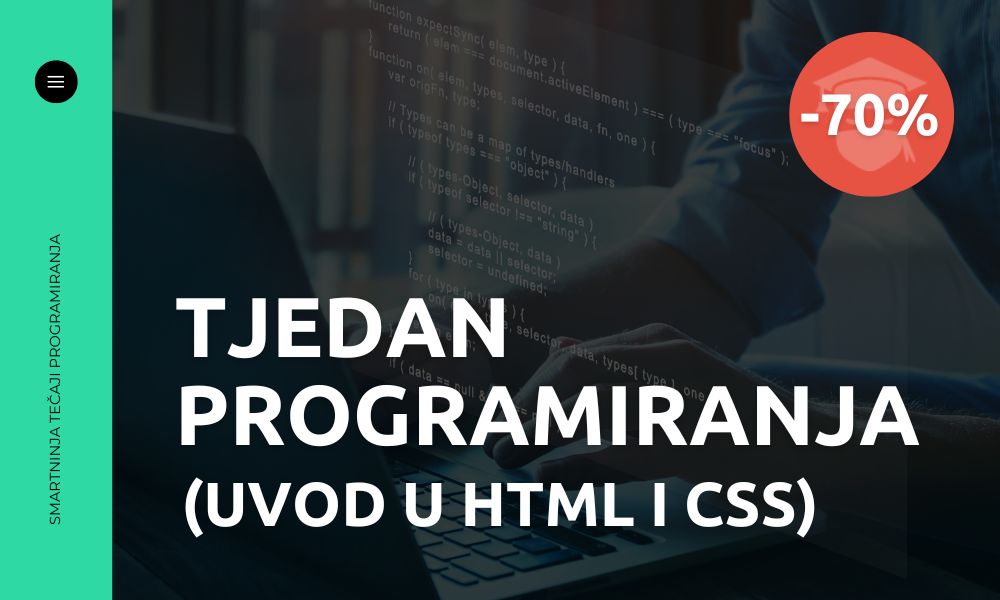
The $165 price and one-week format make this the clearest low-commitment test in the set. It combines HTML and CSS and is explicitly framed as an introduction to front-end programming, so you get a more useful first project than with a single-topic lesson. The limitation is depth: one week can establish vocabulary and basic page-building habits, but it cannot replace sustained practice. Best for a career changer who wants to sample web development before paying for a longer program.
The price evidence points to a practical decision. Pay $165 to test the subject in one week, or begin with the free-to-price-unknown HTML and CSS listings only after confirming what access includes. Since the supplied pages do not state certificate terms, ask whether completion produces a verifiable credential or simply access to lessons.
That short introduction is useful, but it stops before the harder questions: how applications work, how data moves, and how Python fits into a real project. The longer course is where the learning path changes shape.

When You Want More Than Page Styling
A three-month course demands a different level of commitment, but it also addresses the gap that short introductions leave behind. The listing describes practical work across front-end, back-end, and Python, with more than 20 small projects. That is the only item here with a clearly stated project volume, although its price and certificate terms are not supplied.
Web Development Course
Three months and more than 20 small projects put this course in a different category from the one-week introduction. It covers front-end, back-end, and Python, so the syllabus is broader and the workload is likely heavier even though the listing does not state weekly hours. That breadth is valuable for a learner who wants to understand how websites and web applications connect, but it may be too much for someone still learning basic HTML tags. Best for a career changer who can reserve several months for structured practice and wants exposure beyond visual page design.

The longer course is the strongest match for a portfolio-minded learner because repeated small projects create more evidence of practice than a completion badge alone. Still, do not assume that project count equals job readiness. Before enrolling, confirm whether projects are reviewed, whether instruction is live or self-paced, how much feedback is included, and whether the certificate can be verified by employers.
There is also a language and location consideration: the supplied course pages are written in Croatian. That may be perfectly workable for local learners, but English-speaking students should verify teaching language and support before paying.
What to Do Before Enrolling
Use the listings as a shortlist, not as proof that one course guarantees employment. Start with the outcome you need:
- Testing the subject: choose the $165 one-week HTML and CSS course, then build one small responsive page.
- Learning foundations in sequence: begin with HTML, move to CSS, and confirm each provider's current access and certificate terms.
- Building broader development skills: investigate the three-month course and ask for its full syllabus, weekly workload, project feedback process, tuition, and credential details.
My pick for a cautious beginner is the one-week course because its $165 price and short schedule make the commitment visible. My pick for a serious career switcher is Web Development 1, provided the provider can document the teaching format, feedback, and certificate value. The standalone HTML and CSS courses make sense as focused foundations, not as substitutes for full-stack practice.
Once you know whether HTML, CSS, or a broader stack fits your starting point, continue with HTML, CSS, or Full-Stack: Where Should You Start? for a more direct route comparison.