Pixell and Hub is an independent course aggregator. We may earn a commission when you click through.
The Best Programming Courses for Career Changers
Compare nine beginner-friendly programming courses by language, workload, price, and portfolio value before committing your study time.
Quick Picks for Career Changers
Best starting point: Dasturlash asoslari. Python.
Best free practice: Dasturlash from Khan Academy.
Best structured workload: Applied Programming in Python.
Career changers need more than a list of popular languages. You need a course that matches your available hours, gives you visible practice, and points toward work you can explain in an interview. The items below cover foundations, Python, Git, mobile development, and Go, but they are not interchangeable.

Start With Fundamentals, Not Framework Hype
Generic top-course lists often push a framework before explaining variables, control flow, debugging, and version control. That order can leave career changers copying tutorials without understanding why the code works. These first six picks build the base or give you a practical first language.
Dasturlash asoslari. Python
Python is the most sensible first language in this group because the course is explicitly titled programming fundamentals rather than a narrow framework class. The page confirms that Mohirdev provides live manager support and a live communication chat, which matters when a beginner gets stuck on an error. The price is not listed, so compare the current checkout total before enrolling. Choose this over Kotlin or Go if you are still deciding between software development, automation, and data work; its limitation is that the available page extract does not confirm duration, projects, or certificate details.

Dasturlash
Khan Academy's Uzbek programming section is the lowest-risk way to test whether coding holds your attention before paying for a course. The page lists ten sections for introductory JavaScript, including drawing and animation, so learners get immediate visual feedback instead of staring at abstract syntax. It is a weaker route for someone targeting backend Python because the visible curriculum centers on JavaScript. Start here if you have never written code and need a free, low-pressure experiment; move on once exercises feel familiar.
Python dasturlash kursi
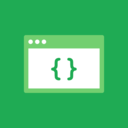
The OpenEdu Python course is the clearest workload commitment in the dataset: 16 weeks at 6 to 7 hours per week, plus 3 credit units. That is roughly 96 to 112 hours, enough time for deliberate practice but too much for a casual weekend project. Compared with Khan Academy, it offers a more academic pace; compared with the Mohirdev fundamentals course, the schedule is actually visible. Pick it if you can protect several weekly study blocks and want structured progress. The trade-off is that the listing does not confirm a portfolio project or employer-recognized certificate.
Введение в GitHub
GitHub's introductory module takes 1 hour and 45 minutes across eight lessons and is marked beginner level. It covers core GitHub functions and is aimed at developers, students, DevOps engineers, administrators, and solution architects, so it is useful support material rather than a complete programming path. The Microsoft training page also shows an achievement badge and 900 XP, but those signals should not be confused with a professional certification. Use it alongside Python, not instead of Python.
Git asoslari
Git basics fills the gap that many beginner programming courses ignore: how to save, compare, and share code safely. Mohirdev lists the price as 297,000 in the source page data, which is the only confirmed paid price among these picks; the platform also advertises live manager support and a live chat. Buy this after you can write small programs, not before. A Git course will not teach programming logic, but it can make your first portfolio repositories look far more credible than folders of unnamed files.

The first group answers the broad question: can you build a durable coding base? The remaining three courses narrow the destination to mobile development or a production-oriented language. That focus can be useful, but specialization too early is expensive in time and motivation.
Specialize Only After You Know the Destination
Mobile and backend courses make sense once you can name the kind of software you want to build. They are less forgiving as first purchases because the language is tied more closely to a particular ecosystem.

Android & iOS mobil dasturlash kursi
The Flutter course is labeled for Android and iOS mobile development and beginners, giving it a clearer product target than the general Python courses. Mohirdev's page again confirms live manager support and a live chat, but the extract does not reveal price, duration, project count, or certificate value. That makes the course difficult to compare on return. Pick it when your goal is to build mobile apps across both major platforms; skip it as a first step if you are still learning programming logic.

GO dasturlash tili
Go is a better fit for a learner who already understands basic programming and wants to explore backend or systems work. The title confirms the language, while the page extract confirms live manager support and chat but provides no public price or workload details. That uncertainty matters for a career changer comparing paid study paths. Start with Python fundamentals or Khan Academy first, then use Go when you can explain functions, data structures, and debugging without relying on copy-paste tutorials.

Kotlin dasturlash tili
Kotlin belongs near the mobile-specialization end of the route, especially beside the Flutter course. Native Kotlin can make sense for someone committed to Android, while Flutter points toward one codebase for Android and iOS; the available listings do not provide enough technical detail to declare one superior. The Kotlin page does confirm access to Mohirdev's live manager support and chat. Pick it only after choosing Android as your target, because a narrow language course gives you less room to change direction than Python.

What Career Changers Should Avoid
- Paying before checking the workload: only the OpenEdu listing gives a clear schedule, at 16 weeks and 6 to 7 hours weekly.
- Treating badges as job credentials: Microsoft lists 900 XP and an achievement badge for its GitHub module, but that is not the same as a professional certification.
- Choosing a language by trend alone: Kotlin and Go are useful, but the available pages do not show enough project or certificate detail to justify choosing them before fundamentals.
- Ignoring version control: a beginner who learns Python without Git can build code but struggle to present it cleanly.
- Assuming a course equals a portfolio: none of the supplied page extracts confirms a specific capstone project, so verify project requirements before paying.
Before enrolling, ask three blunt questions: How many hours per week are required? What will you build? What proof of completion is included? If the provider cannot answer those questions clearly, free practice is the safer first move.
Quick Comparison
| Course | Best for | Confirmed details | Price shown |
|---|---|---|---|
| Dasturlash asoslari. Python | First programming language | Live manager support and chat | Not listed |
| Dasturlash | Free JavaScript practice | 10 introductory sections | Not listed |
| Applied Programming in Python | Structured Python study | 16 weeks, 6–7 hours weekly, 3 credits | Not listed |
| Introduction to GitHub | Version-control orientation | 1 hour 45 minutes, 8 lessons, beginner level | Not listed |
| Git asoslari | Practical Git skills | Live manager support and chat | 297,000 in source data |
| Flutter | Cross-platform mobile development | Beginner Android and iOS focus | Not listed |
| Go dasturlash tili | Backend exploration | Live manager support and chat | Not listed |
| Kotlin dasturlash tili | Android specialization | Live manager support and chat | Not listed |
My route for most career changers is simple: test programming with Khan Academy, move to Python fundamentals, learn GitHub and Git, then specialize in Flutter, Kotlin, or Go only after you have built small working projects. The OpenEdu course is the better pick for disciplined learners who can commit 6 to 7 hours each week, while Mohirdev's Git course is the clearest paid add-on because its source data includes a confirmed price of 297,000.
Choose Python if you want flexibility, Git if you already code, Flutter for cross-platform mobile apps, Kotlin for Android, and Go for a later backend specialization. For the next decision in a web-development path, read Frontend Foundations or Node.js: Which Course Comes First?.